
LNG · liquid nitrogen · liquid oxygen · liquid hydrogen
Cold shoes, trunnions, anchors and pipe saddles on cryogenic lines need a load-bearing insulator between the cold pipe and the warm pipe-rack steel. Glass-epoxy blocks, often specified as G10 Micarta, do that job. We supply STB-1 Cryogenic Insulator as cut and drilled insulation blocks made to your support drawings.
It carries 48,000 psi in compression, keeps its properties down to −270 °C (−454 °F) and conducts heat more than 350 times less than steel.
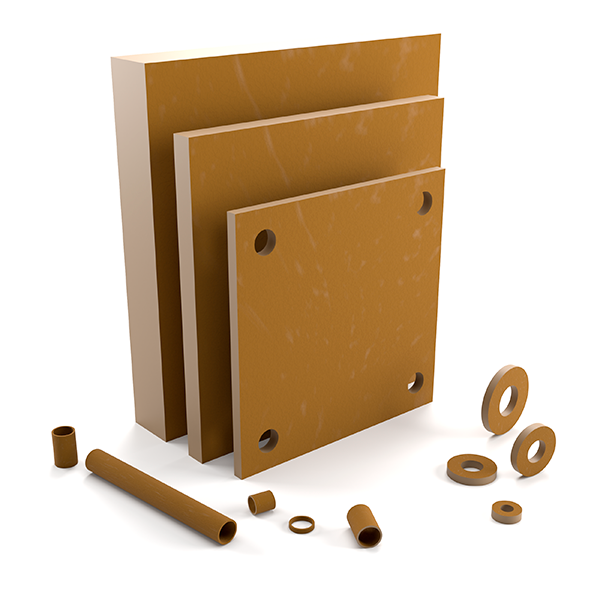
A glass-epoxy block between the pipe shoe and the base plate keeps the cold from reaching the support steel and stops condensation and ice at the rack.
Insulation blocks carry the anchor and guide loads while isolating the cold pipe. Isolating bushings keep bolts from bridging the joint.
A block under the trunnion base plate isolates the cold leg of the support from the foundation or steel.
Pads under saddle and clamp assemblies carry the pipe weight across the full bearing area without bridging heat to the rack.
Pair the insulation block with a slide plate where the line moves. Benchmark also manufactures PTFE slide bearings.
The same pads go under tank saddles, skirts and legs, pumps, valves and vaporizers.
| Property | Test method | Value |
|---|---|---|
| Minimum operating temperature | — | −270 °C (−454 °F) |
| Max continuous operating temperature | — | 135 °C (275 °F) |
| Compressive strength | ASTM D695 | 48,000 psi (330.9 MPa) |
| Compressive modulus, 1″ thick | ASTM D695 | 400,671 psi |
| Shear strength | ASTM D732 | 16,326 psi |
| Thermal conductivity | ASTM C518 | 1.055 BTU·in/hr·ft²·°F |
| Coefficient of thermal expansion | ASTM D696 | 2.2 × 10⁻⁵ in/in/°C |
| Water absorption | ASTM D229 | 0.35 % |
Send your drawings, operating temperature and design loads to sales@bmssi.ca or call 800-580-4195. We cut and drill every cryogenic isolation pad in house and quote quickly.